Wednesday, April 20, 2011

Kibitzing the Hunt

Hunting is not a particularly popular sport among those of the Hebrew persuasion. My rifle skills at summer camp were so-so, and thus I was never interested in spending a day slaughtering God’s creatures. Thanks to writers like Hemingway, hunting for some possesses a glamorous cachet.  I, however, found tromping through the Wisconsin countryside in search of birds on a cold, dank spring day far from glamorous. It was my first and only hunt, and I went without a rifle.

Cathy, a fellow teacher of Janet’s, and her husband, Jack (not his real name, for reasons apparent later), owned a farm near Cazenovia, Wisconsin. They invited another teacher, Eva, her husband, Norman, and Cathy’s sister and brother-in-law from Minneapolis for a weekend at the farm over May 23-25, 1975. We arrived late on Friday and awoke to find the men would be hunting this day. O.K., Jack and Norman would hunt and the brother-in-law and I would, in effect, kibitz the hunt.

Saturday dawned cold – in the 40s – cloudy and damp, just short of misting. Leaves had just begun returning to the trees, as the four and Jack’s dog made our way across woods, streams and pastures, occasionally traversing rusted barbed-wire fences. My assignment was carrying a #10 tin can filled with the farm’s homegrown weed, of which all but Norman indulged in before heading out. At one point, before nary a shot had been fired, we reached the top of a hill, only to find a few cows in the meadow. I thought of the story, which may be apocryphal, of Billy Martin shooting a rancher’s cows as part of a joke played on him by Mickey Mantle during a Texas hunting expedition.

Plunging again into the woods, Jack spotted a nest high in a distant tree. He aimed his rifle at it – I don’t think he was going to shoot – when just then a bird flew up from another direction. Norman, a Vietnam veteran, bagged it with one shot. They tried to get the dog to fetch it but he didn’t, so Norman retrieved the bird – a grouse – and placed it in a pocket in his hunting jacket. 

With no more birds in sight, the hunters figured on one more opportunity. Before us stood a field of dried-up cornstalks, each around 7 feet tall. Jack asked his brother-and-law and me to roust the birds out of the field; that is, to walk down the rows and swing our arms against the stalks in hopes birds were hiding within. As we were about to embark, Jack added, “Don’t get too far out there or the shot is liable to rain down on your heads.” Great, I thought, traipsing down a row, my life is going to end buzzed on bad weed after the only hunt of my life. Luckily, no birds rousted, no shots fired.

In keeping with the rustic theme of the weekend, dinner was forelle blau, or blue trout, a recipe from Jack’s German homeland he would try for the first time. The trout came from the pond on the property created by damming a stream. I doubt the fish qualified for the state’s size limit but because they were on caught on Jack’s property, they ended up on the dinner table. The recipe involved poaching the whole trout in vinegar – which turns the skin blue – and water and possibly other seasonings. Unfortunately, between having the poaching solution more at a boil than a light simmer and the extremely small size of the fish, most of trout busted into pieces What remained was hardly appetizing and insufficient to feed eight people. I don’t remember eating any but there was no alternative course and thus I went to bed very hungry.

We returned home on Sunday, without ever seeing the sun. Our hosts never invited us back, and my glamorous hunting career ended. The grouse? It was cleaned and put in the freezer, where it was forgotten until it became inedible. I appreciate the skill shown by hunters like Norman, although the sport is not for me; game farms and big-game safaris, however, don’t seem like sport at all.

Saturday, April 16, 2011

Lvov and Other Places

I recently read glowing reports about the city of Lvov in Ukraine, including one from New York Times foreign correspondent Clifford J. Levy, who listed it was the one place he’d like to revisit in 2011. The city, the largest in western Ukraine with approximately 730,000 residents, is a center of culture and architecture, some dating back to the city’s origin in the 13th century. From 1347 to 1569, Lvov was part of Poland, then the Polish-Lithuanian Commonwealth until 1772. The city in Galicia was in the Austro-Hungarian Empire from 1772 to 1918, then in the new Polish republic until 1939 when it was annexed by the Soviet Union.  Germany occupied the area from July 1941 to July 1944. The Soviet Union recaptured Lvov in its push westward. Martin Buber, Emanuel Ax and Simon Wiesenthal were born here.

Levy briefly noted the once-large Jewish population was now quite small. Before World War II, it stood at about 100,000, then swelled to almost 200,000 as Polish refugees flooded the city. After a pogrom in 1941 by Germans and Ukrainian nationals, the Nazis established a ghetto in the city, shipping Jews in from towns across Galicia like Bukachevtsy. Most of them were sent to the Belzec death camp for immediate extermination, while those found fit to work were sent to the nearby Janowstra labor camp to toil as slave laborers in German arms plants. At the end of the German occupation, only 200-300 Jews remained.

Entrance to the former Lvov ghetto

Tonia and Hinda Mandel took their last breaths in Lvov, and certainly other of my family members passed through before their deaths. Here are the names and their stories to go with the brutal statistics.

As noted in my “Nazism in America” post (November 1, 2010), my great-grandfather, Abraham Bloomfeld, had three sisters, who for unknown reasons had the surname Winz. All were born in Burszytn in Galicia in the 1860s. One was Rose Winz, who married Meshulum Zalman Mandel from Bukachevtsy, a town in Galicia established in 1438, in 1884. Together, they had 10 children (all born in Bukachevtsy); the first three did not reach age 3. Numbers 5 through 8 immigrated to the United States. The fourth, Benjamin, and ninth and tenth, Charcha and Gitel, were not so fortunate, as Nazi deportations began in September 1942.

Rose Winz Mandel

Benjamin Mandel, born September 28, 1888, married Perel Glogower, also of Bukachevtsy, probably in 1917. One son, Mendel, died at 5 months, and a daughter, Eva died at 1 year. The sixth of the six children, Solomon was born April 5, 1925, and survived the war, passing away in Poland in 1970. Their three daughters, their husbands and children became part of the 6 million, as did aunts Charcha and Gitel and their families.


 Bukachevtsy sign

Sala Mandel, born five years before my mother in 1918, was married to Morris Schwartz. Their one daughter, Rusha, was born in 1939.  Sala and Rusha were murdered in Belzec in 1942. Morris died in an unknown place in Poland one year later. As noted earlier, Tonia (b. November 17, 1920) and Hinda (b. 1923) perished in Lvov in 1942.   

Rohatyn, another small town in the area, became the final destination for Charcha Mandel, her husband and two of her sister Gitel’s children. The Germans established a ghetto in the town in the fall of 1941 and murdered 2,000 Jews on March 20, 1942. Like Bukachevtsy, deportations to Belzec began in September 1942, and the ghetto was liquidated in June 1943. Charcha, born in 1900, married David Lempel, three years her senior, on April 3, 1924. Both perished in Rohatyn in 1943. The youngest Mandel daughter, Gitel (b. 1901), and her husband Leon Dawer (b. 1899) had four children. Solomon (b. 1926) and Elcha (b. 1932) were murdered in Rohatyn, and Tonia (b. 1930) was killed in Belzec, all in 1943. Abraham was spared this torture; he died short of a year old in 1929.

Jewish cemetery, Rohatyn

In checking the profile of a very skilled Flickr Contact, I found she is a native of Lvov, now living in Chicago. I wrote her and explained my interest in her hometown. She provided some information on the city and herself. After graduating from college in Ukraine, her family moved to the United States in 1995. She noted that all of the information and history taught was through the Soviet prism. Regarding Lvov’s past, she wrote, “I knew about the ghetto because my mother’s friend was there but he didn’t like to share information. Now he is living in Israel.”

I am therefore sharing this information. For those like Levy who may be visiting Lvov and admiring the beauty and culture, please remember that you will return home. Tonia and Hinda Mandel never did.

Former Bukachevtsy synagogue

Friday, April 8, 2011

Tarks of Dania Beach

One cannot claim to be a restaurant critic when he orders the same thing on every visit. I’m writing about this particular establishment because I passed it by for almost 30 years before stopping in. It’s now an annual eating spot.

Tarks of Dania Beach, Florida, established in 1966, is a five-minute drive south of Fort Lauderdale-Hollywood International Airport. Travelers and locals driving on Federal Highway (U.S. 1) on their way to and from Fort Lauderdale or Jaxson’s famous ice cream parlor spot it on the east side of the road, a small, one-story building featuring paintings of palm trees, an oyster and a penguin. Despite traveling almost annually to south Florida since 1973, I didn’t stop in until five years ago, after I’d arrived a few days before Janet (my reward for opening the apartment, cleaning it up and buying the groceries). She has since resisted my requests to dine there, as its dive-like appearance and her avoidance of deep-fried foods dampened her interest.

A hole-in-the-wall, dive or whatever you want to call it, Tarks is as far from a white tablecloth establishment as it gets. The interior consists of a u-shaped counter and ledges at the windows, and it’s just clean enough to pass inspections. Well-worn stools are the only seating option.  Its small open kitchen puts everybody in direct contact. Rock music blares on the speakers, and ESPN is always on the one old analog TV. The fare is mostly fresh seafood – deep-fried, grilled and steamed – as well as buffalo wings. Bottled and draft beers ($1.50 during weekday happy hours) are the beverages of choice. Rolls of paper towels serve as napkins.

I opted for the fried clam bellies on my first visit. The menu indicated these were fresh, as opposed to the frozen clam strips. Curly fries seemed like a better option than the regular fries. The clams arrived hot from the fryer, which is visible behind the counter. The fries were dusted with seasoned salt. I simply say this: If I were on Death Row, I would order this for part of my last meal. They were so good I’ve never ordered another entrée there. And when they say fresh, they mean fresh. During one visit, the server asked if I’d mind a delay because they didn’t have any bellies ready. Of course not, I replied, to which one of the cooks shucked a dozen, then dredged and tossed them into the fryer. The wait, of course, was totally worthwhile.

The workers and patrons cover a wide spectrum of life. The main server calls me “Hon,” and the cooks always have quip or joke (usually NSFW). Diners tend to be a mix of residents and snowbirds, with a few tourists tossed in. Janet finally expressed an interest in eating there, and her first visit last month is a perfect example of Tarks’ dynamics. Arriving in mid-afternoon, we garnered the last two stools at the counter. A group of French-Canadians, a common sight in south Florida during the winter, were at our end, diligently poring over the menu for this first-time visit. While dining on clam bellies, New England clam chowder and conch salad, we struck up a conversation with the man on the next stool. Janet recognized his New York accent; sure enough, he’d dug clams in his youth on Long Island Sound.  Finding out we were from Chicago, he noted his college roommates were from the western suburbs. 

“Where did you go to college?” I asked. His reply: “Harvard.” As Janet noted, even men of Harvard love Tarks. Don’t pass it by. Maybe some day I’ll get to the oysters, shrimp, mahi-mahi and wings. Just don’t miss the clam bellies.

Monday, April 4, 2011

The Third New Year's Day

I celebrate three New Year’s Days annually: January 1, Rosh Hashanah and Opening Day at Sox Park (or the first game attended). All affirm the passage of time in distinct ways: the calendar, religion and tradition.

The third home game of this season, on April 9 vs. Tampa Bay, will mark either 58 or 59 years of uninterrupted ballpark visits. I may or may not have attended a game in 1953 and can’t say for certain which game in 1954 was my first. Some years I’ve attended 20 games or more, while others just one. During this span, I missed attending a game in Chicago only one year – 1970 – but saw the Sox at Fenway Park during their miserable 56-106 season.

Comiskey Park 1990 and U.S. Cellular Field 2008

The first trip to the ballpark means a new year for several reasons. First and foremost is being inside a familiar venue for the first time in five or six months and live action on the field. If you’re lucky, it’s relatively warm after a cold winter and the grass is greener than in your neighborhood. Usually very little has changed – 1991 and 2005 notwithstanding – and your eyes pick out favorite spots that reinforce the continuity of life. Another is the people, notably the vendors (the toothless ice-cream guy in my youth; Kenneth my beer hawker today) and concession-stand workers, who never seem to age. And, of course, there’s all of the tradition and memories from childhood through to Social Security age.

Kenneth, 2009

My first Opening Day wasn’t until 1977. At least for the Sox, Opening Day tended to draw the crazies and casual fans who wouldn’t show up again. Frigid temperatures also discouraged attendance. In fact, my uncle and his family after shivering through too many openers began to sit in the right-field grandstands for game 1, figuring if the sun were out the game would be bearable. They took their usual season seats in Box 45, Tier 6 (later Box 39, Row H after the Golden Box renovation) for the 1977 opener versus the Red Sox, and I accepted their invitation to attend. Given the poor 1976 performance (64-97), predictions of a last-place finish behind an expansion team and rumors the team would be sold and moved, I figured I’d better go to one Opening Day before it was too late. Luckily, the day was sunny and in the 70s, and a barrage of hits chased starter Rick Wise in the 2nd inning on the way to a 5-2 White Sox victory. Robust hitting continued, as the team came to be known as The South Side Hit Men and stayed in the pennant race until early September.

View from Box 45, Tier 6, 1990

My next two Opening Days were historically significant: the last one at Comiskey Park in 1990 and the first one at the new Comiskey Park in 1991. Although the ticket stub below states April 2, the last Opening Day at the old ballpark was played on April 9 because of an owners’ lockout that wiped out spring training and pushed back the season by a week. This was only game I attended in a suit and tie, coming from the office and leaving after the 5th inning (the game’s start was delayed by rain, during which the Stones' “Mixed Emotions” and Thin Lizzy's "The Boys Are Back in Town" blared on the stadium speakers) to get home for the Passover Seder. I didn’t miss anything, as the Sox held on to a 2-1 lead and beat the Brewers. Thanks to my friend Bill, I also attended the final game at Comiskey Park.

Opening Day 1990 ticket and final 7th inning stretch, 1990

My most memorable Opening Day featured impressions starting before entering the new Comiskey Park. Walking west from the L, the brand-new ballpark loomed on the south side of 35th Street but the opposite side featured an expected but nonetheless tragic sight: the ballpark of my youth being demolished. Only the huge tree with the “RESALE OF TICKETS AT ANY PRICE IS PROHIBITED” sign would remain by the end of the summer (and still stands). My seat was higher than I’d ever sat (Section 535, Row 27, one row from the back) and will ever sit at Sox Park, as that row was eliminated during the renovation after the 2004 season. Regardless of where one sat, it was still disconcerting to watch the Sox in a new venue after so many years across the street and became more so after the Tigers scored 6 runs in the 3rd and 10 runs in the 4th inning on the way to a 16-0 shellacking.


Opening Day 1991 (demolition and first pitch)

I’ve been to eight Opening Day games, the most recent being last season versus the Indians. The game featured what turned out to be the ESPN's Web Gem of the season, when pitcher Mark Buehrle threw out a runner by tossing the ball between his legs to first base. Even more exciting was my only second game of the season, when 10,520 fans showed up in 2005 to see the White Sox wipe out a 3-0 Indians lead in the 9th and win on a Jermaine Dye walk-off home run. The rest of the year, of course, is history.


Opening Day 2010 (scoreboard replay)

As noted, the first game of the baseball season is special because it brings back many unforgettable memories. Those include the treat of getting our uncle’s box seats for a Sunday doubleheader (despite losing 3-1 votes, mom always decided when we were leaving), the first game of the 1959 World Series (http://brulelaker.blogspot.com/2010/10/world-series-excitement-on-chicagos.html), Bill Veeck’s Twins Night (http://brulelaker.blogspot.com/2010/10/twins-life.html), ditching school on a frigid day and seeing Whitey Ford win his last road victory (http://brulelaker.blogspot.com/2010/10/where-baseball-photography-and-blogging.html), sitting behind the Yankees dugout on a hugely sold-out Bat Day (http://brulelaker.blogspot.com/2010/11/major-gives-us-day-to-remember.html), taking Marisa to her first Sox game, the last game at Comiskey Park, three walk-off home runs and Game 1 of the World Series in 2005 and Mark Buehrle’s no-hitter and perfect game (http://brulelaker.blogspot.com/2011/04/me-and-mark-buehrle.html). For the last one, Seat 4 next to me sat vacant. As the game reached its exciting finish, I felt my father’s presence there. A transcendent experience, seeing that he hadn’t been to the ballpark in 37 years.

With cousin Jim, Game 1 of the 2005 World Series

Thursday, March 31, 2011

Forty Years Ago Today

For whatever reason, I chose the afternoon of Wednesday, March 31, 1971, to get my allergy shots. I can’t remember whether my every-other-week visits to the university clinic were on Wednesdays or whatever day was convenient. Subsequent events would make me happy to have hay fever, which had flared up again three years earlier and required doctor-administered medication, and chosen that day and time.

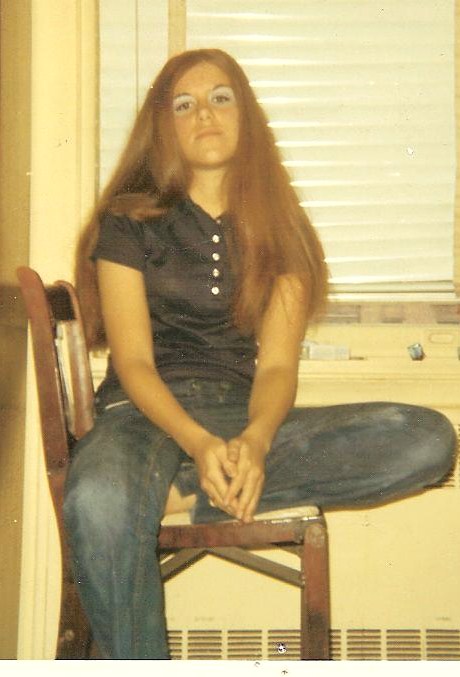
The shots were administered using serum and dosages supplied by my allergist in suburban Chicago. One shot in each arm for allergies to ragweed, grasses and pollen. After my last class of the day, I headed to the clinic, gave my name and sat down opposite a most beautiful woman with waist-length red hair. Despite my extreme shyness and overwhelming fear of rejection, I had to say something, especially since I vaguely recognized her as the one who brought a dog into the dining hall where I had worked the previously semester. Since she was chewing gum, I asked her for a piece. She noted we had a mutual friend, a woman in one of my art history courses who lived on her floor.

Brooklyn, 1971
 
It didn’t take long to ask for a date for the weekend, back when there were “dates” per se. I was confused about her, for although she was from Brooklyn (Flatbush, at that), her German surname, red hair, pug nose, brother at Boston College and mild accent all indicated gentile. Janet turned out to be Jewish, from a kosher home. 

Boston ,1972

Quite simply, we quickly fell madly in love, fueled perhaps in some part by my impending June graduation. Janet would not graduate for another 18 months, and I planned to move to California. My parents were quite surprised how serious the relationship had become when they arrived for the graduation ceremonies. I then did something very rash: I asked her to go to California with me. She convinced her parents with a few white lies, although her brother put in some good words about me. Taking off from Chicago, we made stops in Grand Island, Nebraska; Evergreen, Colorado; and Winnemucca, Nevada; before reaching our Berkeley destination.

Yellowstone, 1971

Home was a large room in Toad Hall, a former fraternity house north of the Cal campus, shared with my friend Steve. I’d spent three weeks there the summer before and knew the area. Steve was working and also traveled home to Los Angeles, which provided more privacy than one would expect. Given the state of the current economy, especially in the Bay Area, I never looked for a job and decided to return to Chicago at the end of the summer. Our journey back took us to Los Angeles, Las Vegas (for about 30 minutes – won’t go into why the hasty departure), Zion and Bryce Canyon National Parks, Grand Teton and Yellowstone, the Badlands and Deadwood, South Dakota, during the Harley-Davidson annual ride.

I somehow landed a job at a small publishing company within two weeks of returning home. We kept up our long-distance relationship between Chicago and Boston, and Janet spent the next summer at summer school at Northwestern. I’d drive east from Skokie after work each evening for dinner and recreation before returning home, where I was living to help subsist on my $6,700 annual income. Janet spent the weekends in town, sleeping in the living room. At a summer family gathering, the husband of one of my father’s cousins came right to the point with me. “Are you going to marry the girl?” he asked. After giving my typically short, evasive answer, he quickly followed, “Either ask her to marry you or forget about it and stop wasting her time.” It took me about two seconds to realize that this was excellent advice.

Chicago 1971

I made one of the most verkocteh marriage proposals ever. As part of a long weekend during her final semester, we attended the Bears-Vikings game on a cold, rainy Monday night, October 23, 1972. The Bears, who would win only one more game while finishing 4-9-1, defeated the Vikings, 13-10, when normally reliable Fred Cox shanked a short field goal try on the last play of the game. We almost got separated on the bus back to the Monroe Street parking lot. Somewhere between there and home I asked her to marry me: no ring (my mother said she’d give me her stone after getting a new ring to celebrate her 25th anniversary), no permission from her father and absolutely no down-on-one knee romance or the like. I figured since Janet was leaving for school the next morning and would graduate in less than two months, I’d better ask now. We didn’t tell my parents before she left – don’t know why either – so she wasn’t actually sure we were engaged.

Brooklyn, 1972

Wedding arrangements moved quickly, with the date set for January 20, 1973, in New York City. Her family planned everything but the prenuptial dinner at the Warwick Hotel, which the husband of another of my father’s cousins once owned. My father-in-law found a rabbi to officiate, and the ceremony and dinner were held at Temple Israel on E. 75th Street. Rabbi Martin Zion would later officiate at Janet’s cousin’s wedding and his grandson was a classmate of our nephew at Wharton some 35 years later. The dinner, catered by the finest kosher caterer in New York, featured 20 different hors d’oeuvres, as counted by an appreciative guest. The honeymoon was in Acapulco and Mexico City. We may never have made it there, as Janet forgot her ID and her father had to cab it to the hotel at Kennedy Airport the next morning.

New York City 1973

So here we are, forty years later. Janet is still a beautiful redhead (no longer natural) and I’m mostly gray (and happy most of it is still there). I’ll spare all of the clichés about marriage and admit she has always done more than her half of the bargain to make it work. I don’t know what my life would be like if I hadn’t gone for the allergy shots on that Wednesday. Thank goodness for ragweed, grasses and pollen and being at the right place at the right time.

Chicago, 2010

Friday, March 25, 2011

A Starched White Shirt

My father worked at a downtown CPA firm until I was 14 years old, at which time he became the chief financial officer of an envelope company at Kedzie and Grand. His uniform, so to speak, during the 1950s and early 1960s was a dark suit, straight-collar white shirt and tie. In the days before permanent press, his shirts were sent to the laundry, where they were washed, starched, ironed and folded. They would reside in paper and plastic containers, neatly folded over a piece of cardboard, in his bottom dresser drawer until the chosen day for wearing.

Dad at work
 
As youngsters, my brother and I used the shirt cardboards for drawing, pasting photos or making charts. They were clearly superior to sheets of paper but had to be used judiciously because of their limited supply. When we ran out, we had permission to invade the bottom drawer and carefully remove the cardboards, making sure the starched white shirts were replaced in orderly fashion. 

My work, on the other hand, didn’t require a suit and tie until ten years into my professional career. Gradually, I went from various colors and styles of no-iron shirts to button-down laundered shirts to almost exclusively straight-collar, heavily starched white shirts. Sure, a blue or striped one would appear every so often but most were pure white, button- or French cuff; pinpoint oxford, broadcloth or, if on sale, Egyptian cotton. I now had ten suits (five winter, five summer) and the requisite number of dress shirts for proper rotation. Gordon at Little Bit Cleaner didn’t have to be told, “Hangers, heavy starch.”

Little Bit Cleaner, N. Clark Street

After some time, I realized that my attraction to these shirts wasn’t just to look professional, especially for clients, some whom were CEOs of Fortune 500 companies. As that youngster fetching shirt cardboards from that bottom drawer, I associated the sight, touch and even the scent of a starched white shirt with being an adult, a successful and respected one like my father. It took me almost twenty years to reach the point where I thought of myself as being successful, and subliminally this included wearing a white shirt five days a week. Finally I was an adult and I was going to dress like one!

Three shirts

A manufacturing company on the West Side demanded less formal attire, and my father eventually went back to no-iron shirts in various colors of solids and stripes. Between the change to casual corporate dress and later (and present) self-employment, I almost never wear a suit and tie. My white shirts have been replaced by more stylish ones from Hilditch & Key and Charles Tyrwhitt. I still have a good supply of starched whites, and I’m going to wear one on Tuesday in dad’s honor.  He will be gone 38 years that day.  Sentimental, sure, but why not?

Thursday, March 10, 2011

Advice Well Taken

During my days as an editor, I read an unpublished autobiographical manuscript by John Clayton, a reporter for the Chicago Tribune and public relations executive during the early and mid-twentieth century. One of his stories has stuck in my mind all of these years, both for its human interest and its punch line, a bit of simple advice people would do well to heed.

Clayton had been a foreign correspondent in Germany, where he reported on the Munich Beer Hall Putsch, Hitler’s attempt to overthrow the government in 1923. He returned to the United States and found the Tribune would not offer him a job in Chicago. Clayton then became a publicist for the Lyric Opera.

Each year, Clayton wrote, the Lyric printed annual programs in several languages, and multiple copies would be left over at the end of the season. One of the extra editions was in Yiddish.  Clayton, being Christian and a relative newcomer to the city, asked his young assistant if he knew of a worthy Jewish organization to send them. The man, an Orthodox Jew, sensed an opportunity to cause trouble. “Why don’t you send them to the Standard Club?” he said, informing Clayton that it was an all-Jewish club. This sounded fine, and he sent the copies to the club.

The Standard Club

Shortly after the programs arrived, Clayton received several angry phone calls, accusing him of insulting the membership. The Standard Club at the time only accepted German Jews, and Yiddish was generally only spoken by Jews of Eastern European decent. Clayton later noted that if any of the members had ever known Yiddish, they had either long since forgotten it or never acknowledged they did. The Lyric was able to get some of its club member subscribers, including Mr. Kuppenheimer, to intercede on its behalf and point out no slight was intended.

After the controversy was cleared up, Clayton sternly admonished his assistant with some excellent advice: “Young man, from now on, conduct your vendettas on your own time.” 

I read this about 35 years ago. I’m going to have to say this to somebody this week.  Simple and to the point, I must say. I hope she listens.